

বাংলাहिन्दी
Store LocatorProblemThe monsoon should bring relief from the heat, but for us, it just brings panic and buckets.
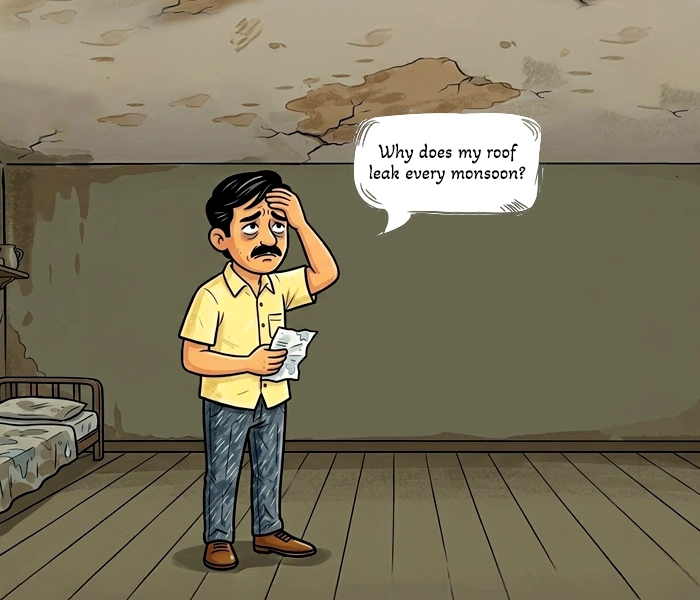
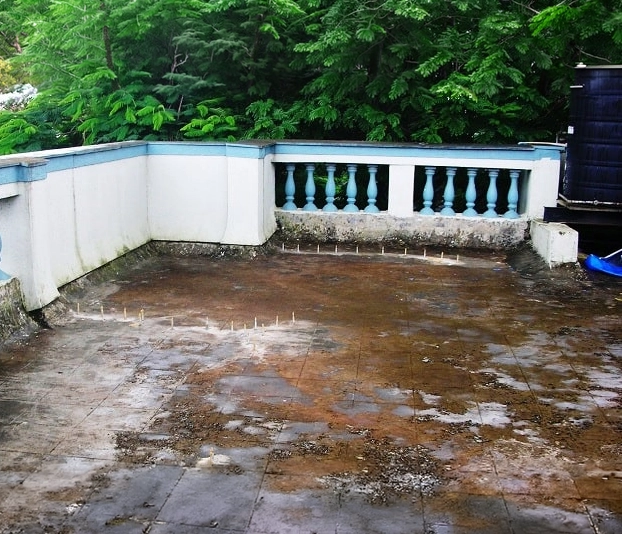
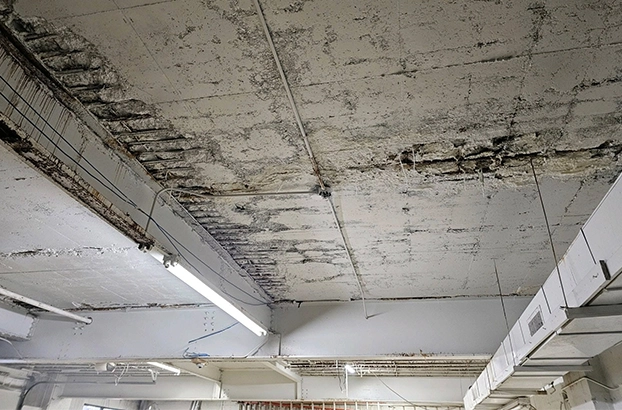
For most people, the arrival of the monsoon in Eastern India is a time of joy.But if you live on the top floor of an apartment building, or if you own an independent premium home with a flat terrace, the first heavy rain often triggers absolute dread. It usually starts with a faint, dark yellow stain spreading across your pristine white ceiling. Then, the expensive false ceiling begins to sag. Finally, the dreaded sound begins: the slow, rhythmic dripping of water directly into your living room or bedroom.
WhyThis Happens: The Science of Roof Failure.
Your roof is the most exposed part of your building.
It takes a brutal beating from the environment every single day. The failure of a roof to keep water out is rarely an accident; it is the direct result of poor engineering and outdated materials unable to handle extreme weather.
Here are the primary reasons your roof is failing:
- Thermal Expansion and Contraction
- Poor Sloping and Water Pooling
- The "Tile Trap" Mistake
- Blocked or Undersized Drainage Pipes

In Eastern India, your terrace bakes under the intense summer sun, often reaching surface temperatures of 60°C. Suddenly, a monsoon shower hits, rapidly cooling the surface. This causes the concrete to expand and contract violently. Standard cement and cheap tar cannot handle this movement. They become brittle, crack, and create thousands of microscopic pathways for rainwater to enter.
A flat roof should never be perfectly flat. It must have a scientifically calculated gradient (slope) to guide rainwater immediately into the drainage pipes. If the slope is flawed, water forms stagnant pools on the terrace. Over time, the constant hydrostatic pressure of pooled water forces moisture deep into the porous concrete slab.
Many homeowners try to stop roof leaks by laying ceramic tiles over the terrace. This is a massive mistake. The cement joints between the tiles eventually crack. Rainwater seeps through these cracks and gets trapped underneath the tiles. The water has nowhere to evaporate, turning your roof into a permanent, hidden swimming pool that constantly feeds moisture into your ceiling.
Often, the waterproofing is fine, but the drainage pipes (khurras) are too narrow or blocked by leaves and debris. During heavy rain, the water backs up, rises above the waterproofing level, and floods the slab.
HowINFRAHUB Solves: The Engineered Pathway
You cannot fight the forces of nature with generic black tar and guesswork. Backed by BPCOne’s 23 years of heavy infrastructure experience—where we engineer massive concrete highway bridges to withstand decades of relentless rain and sun without leaking - INFRAHUB provides a permanent, scientific waterproofing solution for your roof.
- 1
Diagnostic Site Inspection
We do not just look at the wet patch on your ceiling. You book a Site Inspection, and our engineers assess your entire terrace. We check the existing gradient using precision leveling tools, identify areas of water pooling, and inspect the structural joints where the roof meets the parapet wall—a common, hidden entry point for water..
- 2
Material Verification at INFRA.CLINIC
Where the root cause of your problem is scientifically identified. This is achieved through rigorous engineering analysis, precise field measurement, and direct referral to INFRA.CLINIC laboratory testing in scenarios where the diagnosis requires undeniable, certified evidence rather than just visual observation.
- 3
Engineering Consultation & Specification
Our engineers design a comprehensive, multi-layer waterproofing system. We specify the exact polymer-modified mortar needed to correct your roof's slope. We detail a multi-coat application of high-elongation elastomeric liquid membranes that form a seamless, rubber-like shield across your entire terrace, turning it into an impermeable basin.
- 4
Factory - Direct Supply
Once the technical blueprint is ready, INFRAHUB supplies the lab-verified primers, crack-fillers, and UV-resistant PU roof coatings directly to your site, ensuring your contractor executes the system flawlessly with authentic chemistry.
Releated Services
Site Inspection & Structural Assessment
Have our engineers find the exact source of your roof leak and check the gradient.
Engineering Consultation
Get a scientific, multi-layer waterproofing blueprint for your terrace.
INFRA.CLINIC Testing
Certify the elasticity and UV resistance of your waterproofing chemicals.
Releated Products
PROCEMHUB
Procure industrial-grade elastomeric roof coatings, PU membranes, and polymer crack fillers.
See DetailsPROCEMHUB
Access premium cement and waterproofing additives to create the perfect protective roof screed.
See DetailsFAQs
Common Questions. Answered Clearly.
No. Traditional bitumen is an outdated method for exposed terraces. It melts and becomes sticky in extreme summer heat, and becomes hard and brittle in the winter. This constant physical change causes it to crack rapidly, destroying its waterproofing ability within a year or two.
Concrete acts like a dense sponge. During a storm, the roof slab absorbs a massive amount of water. Even after the rain stops and the sun comes out, gravity continues to slowly pull that trapped, saturated water downwards through the concrete, causing your ceiling to drip for days.
Applying a thin coat of waterproof paint over existing tiles rarely works. The paint cannot bridge the expanding and contracting joints between the tiles. The correct engineered solution is to either remove the tiles and treat the base slab, or use specialized, heavy-duty clear PU sealers designed explicitly to penetrate and seal tile grouts.
The ideal time is during the dry season (winter or pre-monsoon summer). The concrete slab must be completely dry before applying any chemical membrane. If you trap existing moisture inside the slab by sealing it from the top, the water vapor will eventually push upward and blister the new coating.